

We use cookies to improve your online experiences. To learn more and choose your cookies options, please refer to our cookie policy.
A-LEVEL MUSIC
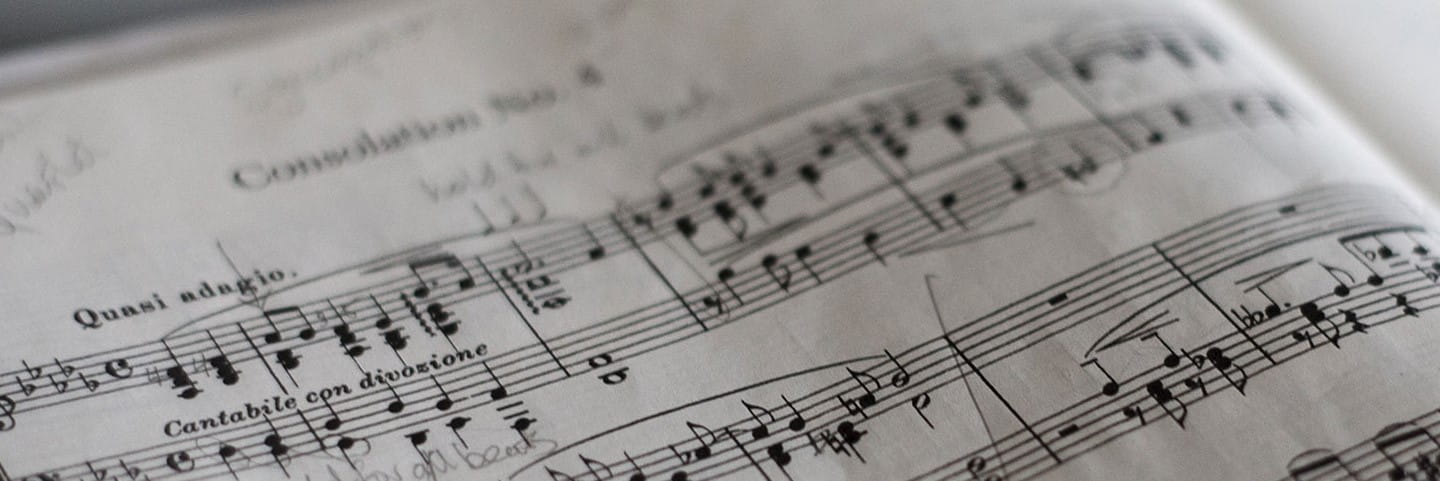
A level Music offers students the chance to explore their love of music through a series of practical tasks and academic enquiry. If you intend to study Music at university or if you are simply looking for an enriching additional subject to broaden your studies and develop important skills for university and beyond, this course is for you!
WHAT IS A-LEVEL MUSIC?
Whether we are listening to music, watching TV or playing computer games, music is everywhere. Some people really enjoy making music as singers or instrumentalists and some simply enjoy listening to it; however we use music, it plays a big part in our lives.
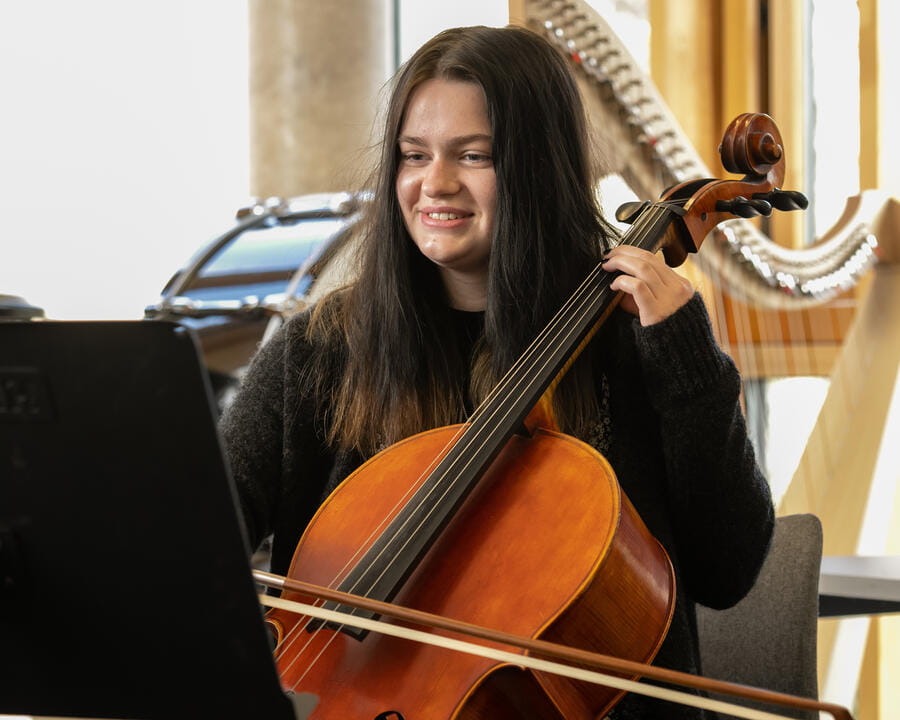
Our classroom, used for teaching Music and Music Technology, is equipped with computers running Sibelius and Cubase and is a great space for rehearsals and chamber recitals. There are two dedicated, soundproofed, music practice rooms fitted with pianos and a drum kit. We have a state-of-the-art recording studio, and recording equipment for the 200 seat Cohen hall and the teaching room. The practice rooms are open to all, and many of our students enjoy rehearsing and playing together even if they are not studying Music

WHAT YOU'LL DO
Students follow the EdExcel specification, which comprises three components:
Performing (30%)
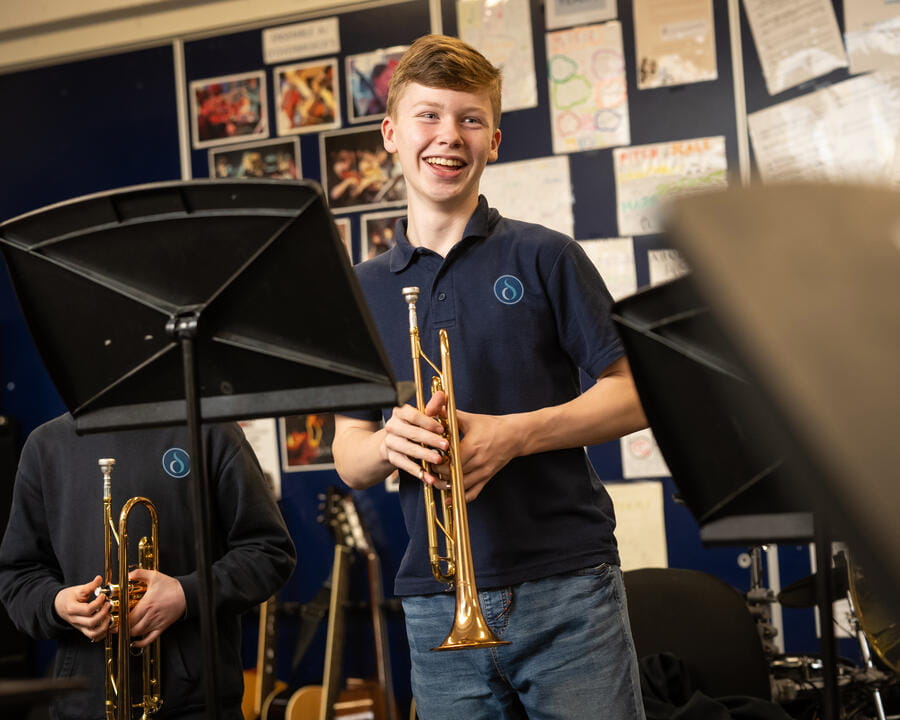
The purpose of this component is to assess students’ performing skills in a solo and/or ensemble context. They will be given the opportunity to rehearse and refine performances on their chosen instrument or voice, developing technical control, expression and interpretative skills. All students are encouraged to take lessons, either in school from one of our peripatetic teachers (in a free period) or privately. Students thinking of studying Music at A level should ideally already be playing at Grade 6 level, and it is expected that students are at Grade 7/8 (or of an equivalent standard) in their final year of study.
This component encourages students to develop creative thinking, aesthetic sensitivity, critical awareness, self-confidence, self-motivation and their own musical interests and skills – skills that are in great demand by universities and employers alike.
COMPOSING (30%)
Composing music is the creative process by which most of the music we experience came into being. Students will be encouraged to explore a range of compositional starting points and investigate a range of techniques for developing and manipulating ideas.
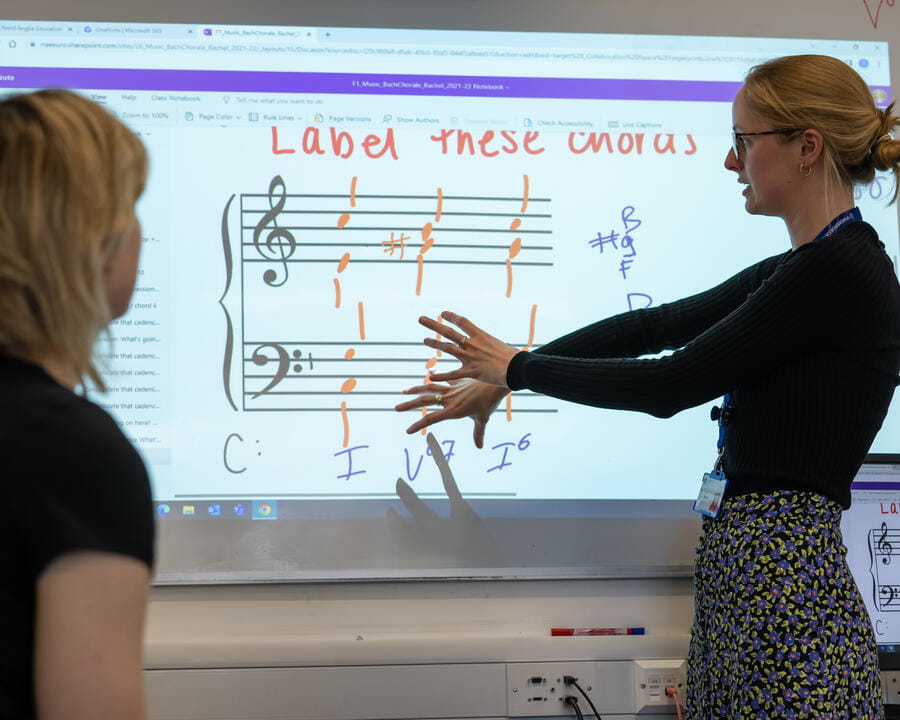
They will then either compose to a Brief or complete a Free Composition, and must produce 4 minutes of music. As well as this, students are taught to harmonise in the style of JS Bach for the Brief Assessing Technique, which forms part of the composition strand of the A-Level course. Weekly lessons will help you understand rules of harmonisation and to perfect voice-leading and part-writing. This is an invaluable process for anyone who is serious about learning to write music with technical skill.

APPRAISING (40%)
The purpose of this component is for students to develop their listening and appraising skills through the study of music across a variety of styles and genres. In turn, the unit provides a chance for students to trace the historical development of music and to see techniques and skills ‘in action’ which might inform their own performance or compositional practice.
To this end, students will study a comprehensive variety of music which includes pop music, fusion and film music, as well as classical instrumental and vocal repertoire from Bach to Stravinsky and beyond. Although the ability to read music is integral, students with limited musical literacy should not be put off from choosing Music as an A level option: you will be supported throughout the course!

WHOM DOES THIS SUBJECT SUIT?
A-Level Music students will typically hold a GCSE grade 7-9 in music. Taking a GCSE in Music, with its core components of Performance, Composition and Appraisal, provides the perfect starting point for studying the same subject at A-Level. The A-Level course represents a consolidation, broadening and deepening of the skills learned at GCSE. If you enjoyed GCSE Music, A-Level Music may well be for you!
A-Level music will suit students who:
- have studied GCSE Music
- have passed grade 5 theory
- are playing at grade 6+ level on their main instrument
- are passionate about music and are open-minded about what they listen to;
- are inquisitive about how music ‘works’;
- play a musical instrument or sing at Grade 6+ level;
- enjoy being creative and like writing their own music;
- enjoy using technology as a creative tool;
WHAT MIGHT THE SUBJECT LEAD TO?
Music is a highly regarded academic subject and whether you take it with a view to a career in music or as an additional A level subject, it is held in high esteem by universities and other institutions of higher education. Indeed, Music is often chosen by those students doing Science and Maths (as well as other arts-based subjects, too) as an enriching third or fourth subject. In the words of Albert Einstein: ‘The greatest scientists are artists as well.’
Music is part art and part science, which means it will help you build your problem solving, research, planning, analytical and critical thinking skills, as well as develop your creativity.

YOUR TEACHERS
Who teaches Music?

Richard Poyser
Director of Music
Richard studied Music at Magdalen College, Oxford, where he was also an Academical Clerk (choral scholar), and went on to study for a Postgraduate Performance Diploma at the Royal Academy of Music as a singer.

Richard Poyser
Richard studied Music at Magdalen College, Oxford, where he was also an Academical Clerk (choral scholar), and went on to study for a Postgraduate Performance Diploma at the Royal Academy of Music as a singer. After leaving the Academy, Richard taught singing at Harrow School and Dulwich College Preparatory School and worked as a freelance singer, performing regularly with The Sixteen in Europe and the USA and appearing as a soloist with choral societies around the UK. Richard also enjoys composing and has written many works for school choirs and ensembles. He moved into classroom teaching when his first daughter was born and held the post of Director of Music at New College School, Oxford for 14 years before moving to d’Overbroeck’s in April 2018. Despite receiving a classical training Richard has a very wide-ranging interest in music and is keen to promote and support the students in whichever styles and genres they are drawn to.
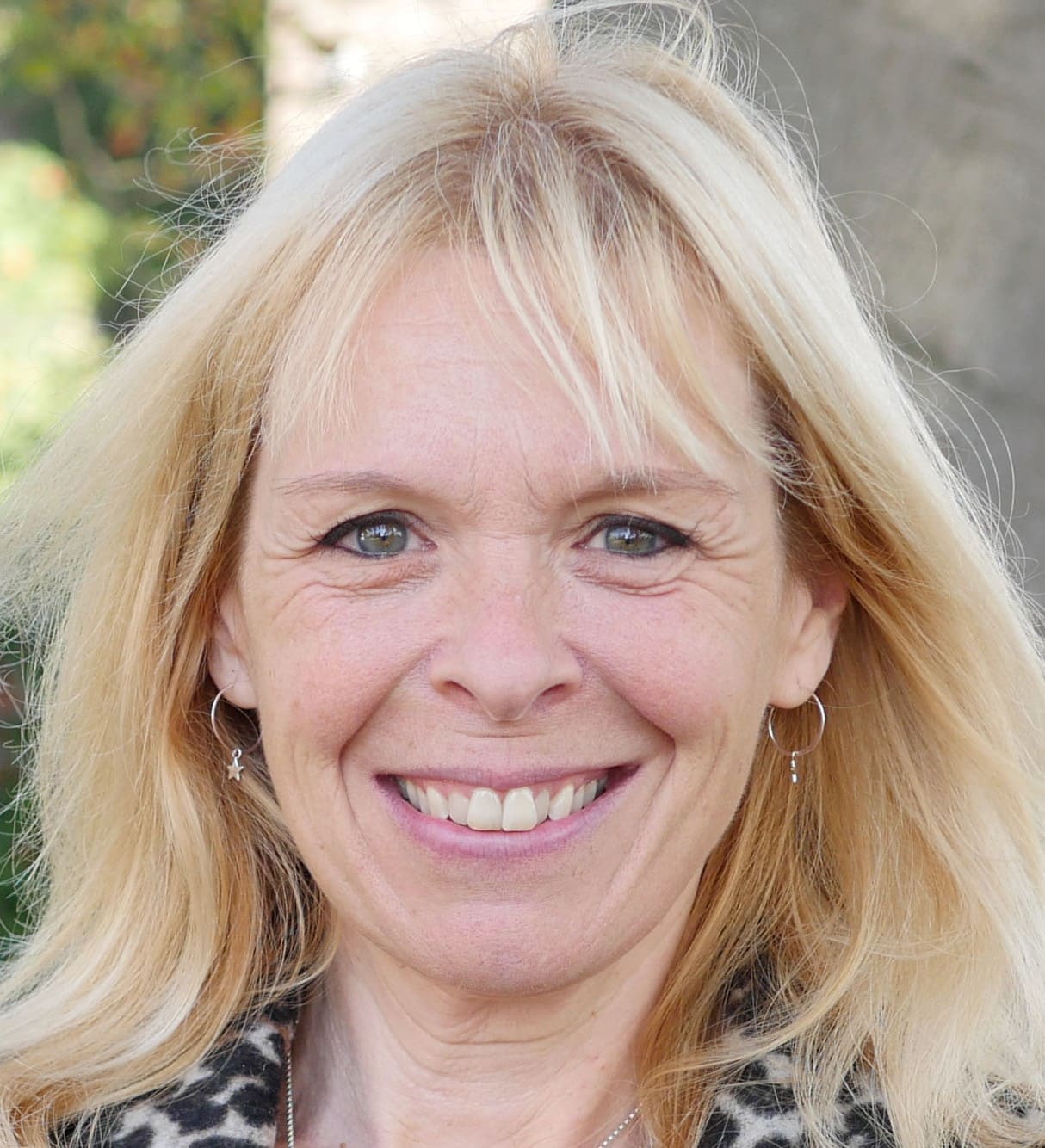
Lianne Skriniar
Teacher of Music
Lianne studied piano and singing at Trinity College of Music. She went on to win the Song Prize in the Kathleen Ferrier Competition and to work as a freelance classical singer until the first of her two daughters was born in 2003.
Lianne Skriniar
Lianne studied piano and singing at Trinity College of Music. She went on to win the Song Prize in the Kathleen Ferrier Competition and to work as a freelance classical singer until the first of her two daughters was born in 2003. She started at d’Overbroeck’s as a peripatetic singing teacher three years later and gradually became more involved with the Music Department over the next few years, conducting and directing several operas and founding the school’s chamber choir, Gaudeamus. Through working more closely with students in ensembles at school she realised that teaching was the career for her and since 2015 she has been a full-time music teacher and has loved every minute of it! Lianne is also the House Co-Ordinator at 7-11 where she organises fun events to bring the students together in their school families.

Rachel Bayley
Teacher of Music and KS3 Coordinator
Rachel read Music at the University of Bristol and returned to Bristol to complete her PGCE in 2016. In between her two degrees, she held a post as a Graduate Residential Assistant at Taunton School International Middle School, where she worked in the boarding houses, taught Music and supported SEND students.
Rachel Bayley
Rachel read Music at the University of Bristol and returned to Bristol to complete her PGCE in 2016. In between her two degrees, she held a post as a Graduate Residential Assistant at Taunton School International Middle School, where she worked in the boarding houses, taught Music and supported SEND students. Furthermore, she has worked at international summer schools in Taunton, working with students both pastorally and academically. Most recently, Rachel was appointed Key Stage 3 Pastoral Coordinator at 7-11 whereby she oversees the pastoral care and support for students in years 7-9. She is also a Mental Health First Aider.
Rachel studied voice with Angela Hickey during her undergraduate degree and has sung in various choirs around the south-west and in Oxford. She also plays the flute and piano. If Rachel is not doing something musical, she is out running or swimming – and is an avid park runner!

UNRIVALLED CHOICE
We offer more than 36 A-level subjects, enabling students to choose a combination that best fits their strengths, interests, and future aspirations.
A-level Subjects